4-year age gap between siblings: is it too big?
A 4-year age gap sits well inside spacing advice, and the newborn year is often easier because your older child is independent and keen to help, though your kids spend a few years at very different stages.
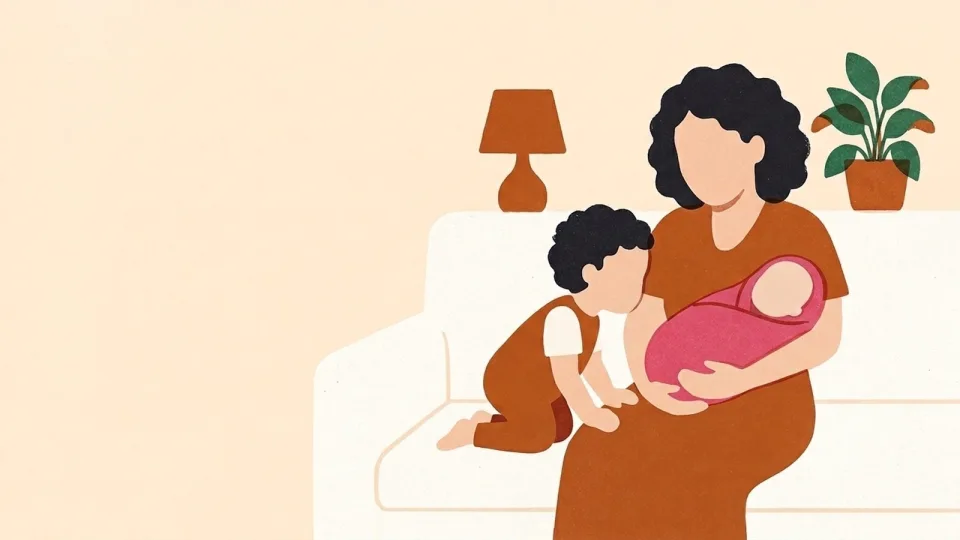
Four years between your kids is not too much. The gap sits comfortably inside medical spacing advice, and lots of parents find the newborn year easier than with a closer gap: your older child is usually potty trained, sleeps through the night and can manage plenty alone.
The catch is that your kids spend longer at very different stages, and you're back to diapers (nappies) and night feeds just after leaving them behind.
Whether they end up close comes down mostly to personality.
Is 4 years too far apart?
Not medically. Four years between births means getting pregnant when your first is about 3. That's well past every common guideline: the 12 months the NHS suggests in the UK, the 18 months US obstetricians use as the point to talk risks through, and the World Health Organization's 24 months.
A large review tied preterm birth and low birth weight to pregnancies started less than 18 or more than 59 months after a birth, and a 4-year gap falls safely between the two. If you've had a cesarean (C-section) or have a health condition, ask your doctor or midwife about timing.
No gap guarantees your kids will get along. What counts most is temperament, and whether each child feels fairly treated. Closer gaps have their own challenges: see the 18-month age gap and the 2-year age gap.
Why the baby year is often easier
Only one of your kids needs you hands-on. Most 4-year-olds use the toilet, feed themselves, dress with a little help and sleep all night.
Your older child also gets what's going on. At 4, most kids talk in full sentences, pick up on other people's feelings and love to help. They can grab a diaper or sing to the baby while you make lunch, and plenty are proud to be the big brother or sister.
Rivalry tends to be lower at first. A preschooler and a newborn rarely want the same toy, and everyone knows who's the big kid and who's the baby.
Preschool or school hours can mean quiet time alone with the baby.
What's harder with a 4-year gap
It can feel like starting over: just as you caught up on sleep, the night feeds return.
Your kids also stay at different stages for years. For months the baby can't join in, and planning outings that suit both a preschooler and an infant is a puzzle. Later, the younger one may slow the older one down, or tag along when the big kid wants some space.
Your older child has had four years with you to themselves, and they'll remember it. Some take the change hard, with tantrums, baby talk or acting out, even after months of excitement.
Baby naps collide with school drop-off and pickup, so expect some juggling. They'll usually be four grades apart, so they'll share a school for a few years at most.
A new baby and a new school year
Your older child often starts something new right around the birth, and what that is depends on where you live:
- England: most children start school in the September after they turn 4.
- Ireland: children can start school at 4.
- Ontario, Canada: lots of 4-year-olds attend junior kindergarten for the full school day.
- US, Australia and New Zealand: kids generally start school around 5, so at 4 yours may be in preschool or pre-K.
If you can, keep the first weeks of school or preschool apart from the birth: settle your child in first, or wait until the baby has settled.
Helping your 4-year-old get used to the baby
Bring up the baby a few months ahead. Months mean little to a preschooler, so link the due date to a season or a holiday they'll recognize.
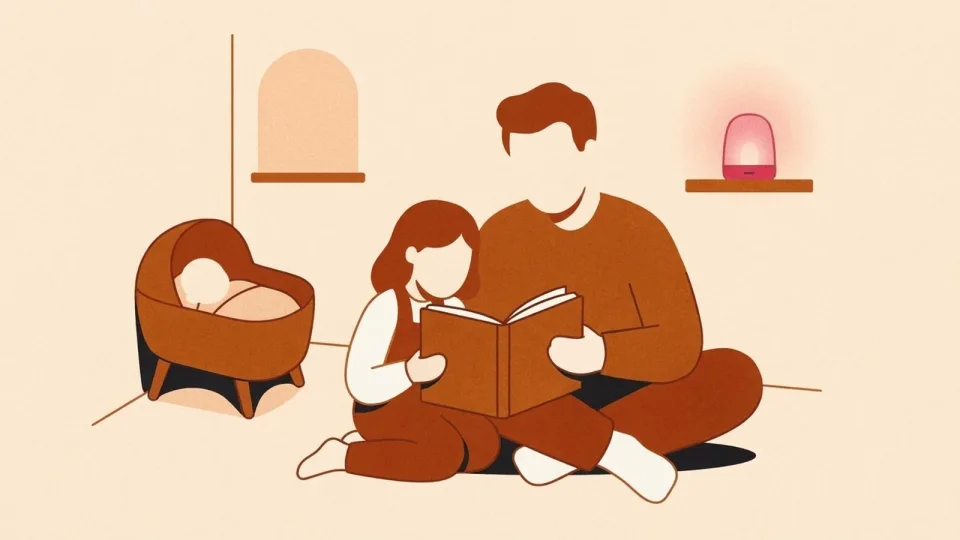
Be honest: the baby will be sweet, but will also cry a lot and need plenty of your attention. Picture books about becoming a big sister or brother help, and so does feeling the baby kick or choosing a toy for the nursery.
Once the baby is here, protect their routines, especially bedtime. Give them time alone with you every day, even just 10 minutes. If you have a partner, trade off baby duty, and ask visitors to spend time with your older child too.
Some backsliding, like baby talk or potty accidents, is normal and usually short-lived. Talk about how they're feeling instead of punishing it.
Welcome their help, but looking after the baby is still your job. Teach them to hold the baby and play gently, and stay within arm's reach.
What other parents say
Many parents with this gap say the newborn year was calmer than they'd braced for, mostly because their older child was so independent and eager to help. The tougher stretch came later, while the kids were at very different stages.
Lots of families saw the kids start playing together once the younger one hit 2 or 3. A few say their kids never grew especially close. Nearly everyone puts that down to personality rather than the years between them.
The bottom line
Four years apart is a perfectly good gap. The baby year tends to be gentler than with closer spacing, in exchange for a few years of kids at very different stages. Get your older child ready, keep up your daily one-on-one time and let their bond grow at its own pace.
FAQ
Can siblings 4 years apart be close?
Absolutely. Temperament and a sense of fair treatment shape their bond, whatever the gap. Real play between them often starts when the younger one is around 2 or 3.
Is it normal for a 4-year-old to be jealous of a new baby?
Yes, even if they were excited about the baby. Daily time alone with you, steady routines and small jobs to help with all take the edge off.
Is a 4-year gap better for your health than a closer one?
From a pregnancy point of view, four years is longer than any of the main guidelines ask for (they range from 12 to 24 months after a birth). Very long gaps (more than about five years between pregnancies) have been tied to a higher chance of preterm birth and low birth weight. Four years falls well short of that.
Going through this right now? Talk to other parents in our Mums forum.
Sources
- WHO: Report of a WHO technical consultation on birth spacing
- ACOG/SMFM: Obstetric Care Consensus No. 8, Interpregnancy Care
- NHS: Sex and contraception after birth
- Conde-Agudelo et al., JAMA 2006: Birth spacing and risk of adverse perinatal outcomes
- McHale, Updegraff and Whiteman, 2012: Sibling relationships and influences in childhood and adolescence
- CDC: Important milestones, 4 years
- KidsHealth: How much sleep do preschoolers need?
- HealthyChildren.org (AAP): Preparing Your Family for a New Baby
- KidsHealth: Preparing your child for a new sibling
- Raising Children Network: Preparing your other children for a new baby
- Raising Children Network: Helping your toddler or preschooler adjust to a new baby
- Raising Children Network: Helping your school-age or teenage child adjust to a new baby
- HSE: Preparing older children for a new baby
- Bradford District Care NHS Trust: Baby's siblings
- GOV.UK: School starting age
- NCES: State kindergarten entrance requirements
- Ontario: Full day junior kindergarten and kindergarten regulation
- Eurydice (European Commission): Primary education in Ireland
- National Parents Council (Ireland): Schools FAQ
- Australian Government: State and territory education systems comparison
- NZ Ministry of Education: Primary and intermediate schooling in NZ